
When I talk with people from outside of this industry, and we discuss the products, those people are often amazed at how expensive an isotope ratio mass spectrometer is. They see a complicated-looking thing, mostly made of metal, about the size of a small family car. So they guess it would cost… about the same amount as a small family car. So you can imagine their surprise when they hear that the average selling price of an instrument from Isotopx would buy you a decent Ferrari, Lamborghini or Rolls Royce. Why so expensive, they often ask. There are a number of reasons, so let’s take a look…
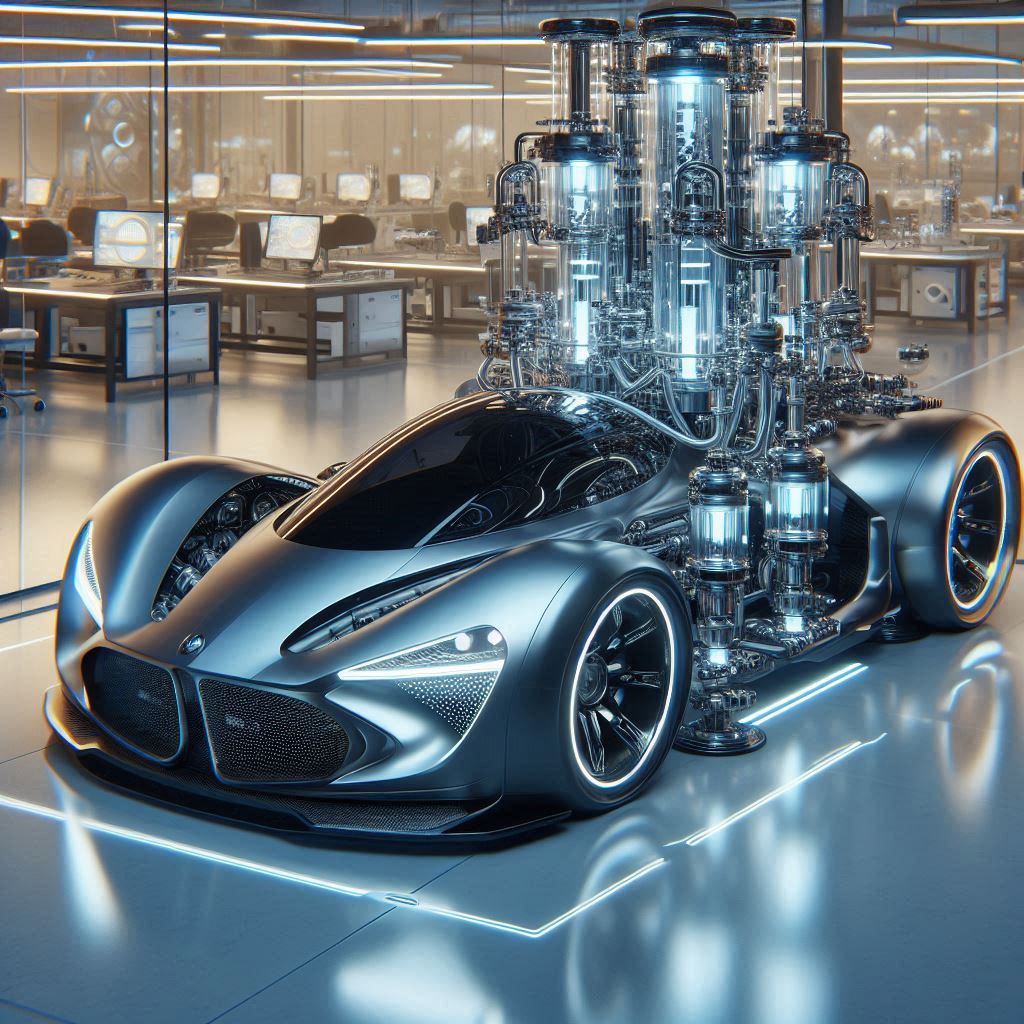
The design work takes a huge amount of time
I know from personal experience that designing an isotope ratio mass spectrometer takes a lot more time and effort (and therefore cost) than you originally think. This is a performance-driven industry so you need to design your shiny new mass spec to have ever-higher performance, ideally better than that of your competitors, and better than that of your previous model. This means we need the very best scientists that money can buy. We lock them in a room and tell them not to come out until they’ve doubled the sensitivity, which may not be until a few years later. You can read a bit more about the development process in a previous blog here.
What makes it harder is that there is an expectation from the instrument users that a shiny new model will come along every once in a while, I mean; who wants the model that was designed 20 years ago? So if your new toy is late to market then there is more pressure to move faster, which inevitably costs more. Needless to say this is a vicious cycle that never ends. But trust me on the fact that whatever you think it will cost to design and develop your new mass spec, the truth is that it will be much more.
The parts that we buy in to fit to the MS can be very expensive
Here at Isotopx we make quite a few of the parts that go into our instruments. But we also buy a lot of parts in, typically because we don’t have the engineering facilities or skills inhouse to design and make them ourselves. Vacuum pumps, printed circuit boards, metal extrusions… the list is long. And the list is expensive! For the reasons mentioned above, the assemblies and components we buy in from third-party suppliers are also costly to design and develop, and in these cases the design cost is passed on to us.
You might be very surprised to see just how much a decent-sized turbomolecular pump costs; so much (many thousands) that it may as well be made of gold and encrusted with diamonds. Fully assembled electronics units are just the same; they may look basic and functional but they are designed and built to very rigorous safety, emissions and reliability standards which of course again doesn’t come cheap. And as for a CNC-machined steel block transformed into a vacuum chamber… don’t even ask!
There is no economy of scale
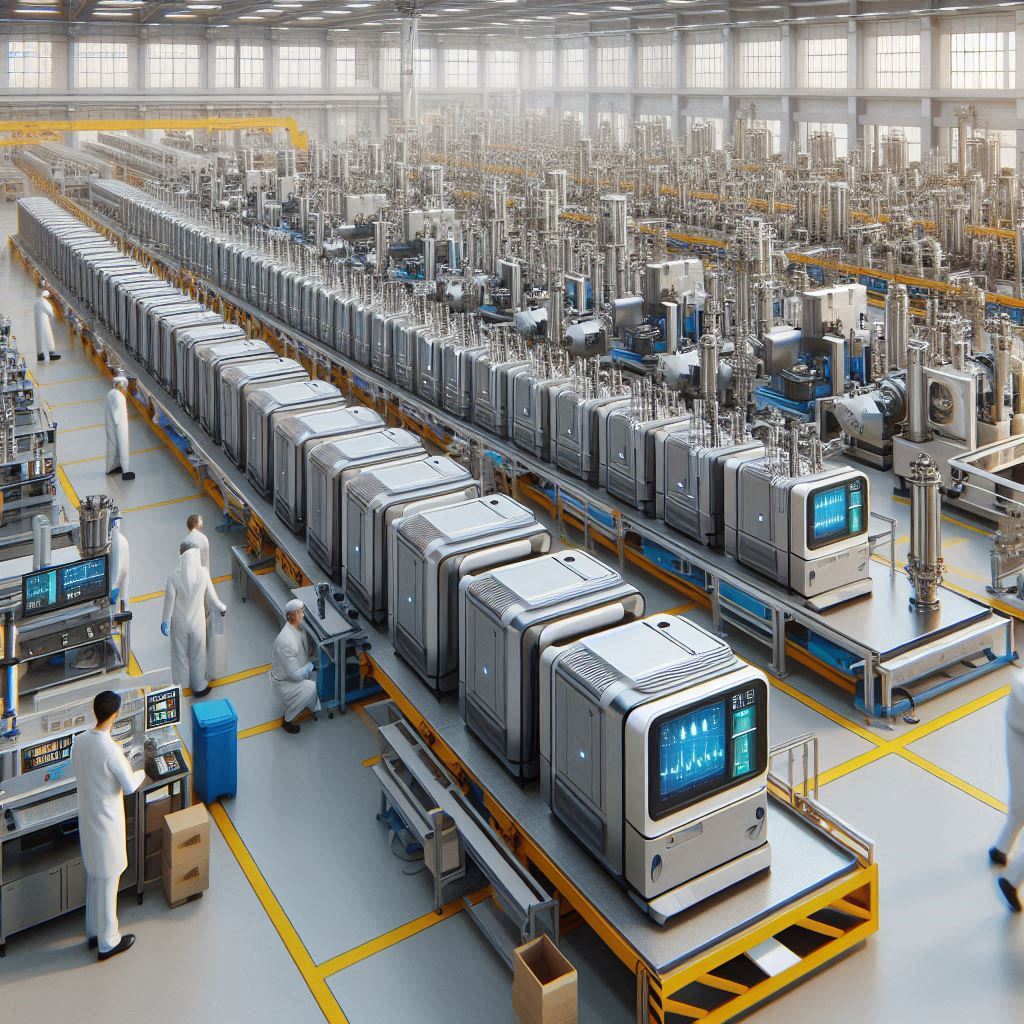
One of the biggest reasons for the cost of analytical instruments like ours is that there is no economy of scale. Let’s say you started up a brand new telecommunications company. You designed a new cellular phone that could take on the might of Apple, Samsung and the rest. If you were to build ten million of them (in a purpose-designed factory, naturally), then the cost per unit would be quite palatable. But if you wanted to build seven of those cellular handsets, and you don’t have that fancy factory… then the cost of each one would be enormous.
Having components manufactured in tiny volumes usually involves doing much of the work by hand, with the obvious cost implications. Economies of scale in industrial manufacturing often don’t start to get attractive until the number of units is in to the thousands or more likely millions. Even the most optimistic sales manager is never going to forecast isotope ratio mass spec sales in the thousands of units, so we’re stuck with low volume / huge cost.
There is the cost of sales
Another factor is that despite what the manufacturers may hope for, isotope ratio mass spectrometers don’t sell themselves. We operate in an environment where there are multiple competing vendors, all hoping that the dynamic young scientist granted some funding will buy from them. As a consequence of this, us vendors need to do all we can to place our products in the line of sight of those scientists. And that means visiting the scientists, attending the conferences, advertising, brand building, and all of those other sales and marketing activities we know and love (well, maybe not love). Obviously there is a cost to this, too, and that also needs factoring in to the selling price of the instrument. Those fancy besuited salesmen with huge Rolex watches don’t cost pennies.

How do we work out the selling price?
That’s an exceedingly good question, and not an easy one to answer. As with any consumer product, pricing depends on a number of factors including customer expectation, competitor pricing, and of course the ultimate requirement to do business and make some money from the product. Part of product development is pricing; in our business, we know the market well so we’ll know the likely sales price of a product long before we start to develop it.
This is especially true for a product that is entering a mature market. If we introduce a new TIMS instrument then we already know what the customer base expects. If we can offer potential customers something new (faster, more precise, better data) then we may be able to charge a little more. But there is a market expectation and you can’t ignore it. Actually, that makes pricing a lot easier because we know what people are expecting to pay. So, we take that value and work backwards to see if we can build it cheaply enough to sell it at this level and still make money.
On the other hand, if we’re developing a totally new product with no precedent then it is a lot harder. What will scientists be willing to pay? Our industry has been through this a number of times, even in recent years. Specialist high resolution isotope ratio instruments for isotopologues are a good example; these instruments are virtually unique so there is no market expectation. In these cases the pricing is often calculated the other way – in other words the cost to make and sell the instrument is used to work out the final price that the customer will pay. However, if the price that this calculation produces is beyond what your customers are willing to pay, then you have some difficult decisions to make!
So now you know why they cost so much. Will we ever see cheap, mass produced isotope ratio mass spectrometers from the likes of Amazon and Temu (other high turnover retailers are available)? Not likely any time soon, I’m sorry to say!

Hopefully this short blog helped to explain the excruciating cost of the analytical instruments we use. If you have ever experience the disappointment of opening a quote for a mass spec, finding the price to be way out of your budget, or have any other comments about the content, then please send your emails direct to me at (Stephen.guilfoyle@isotopx.com). More soon…